Dreamy Sunday Font Review for Branding Projects
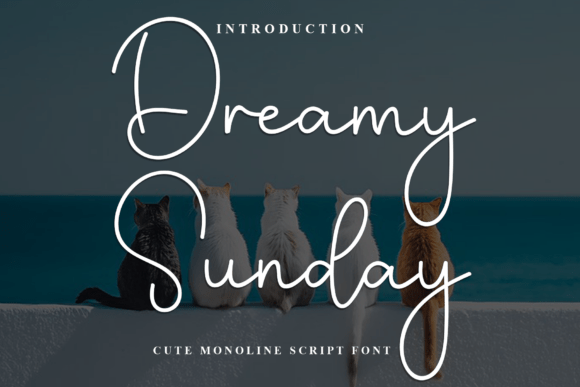
There’s something about starting a new brand identity project that feels like opening a blank canvas. Recently, I found myself in just that situation—tasked with creating a visual system for a boutique skincare line. The challenge? Finding the right font to capture the essence of calm, care, and simplicity. That’s when I stumbled upon Dreamy Sunday, a soft, graceful, and cute monoline script font from Script Amp.
Airy Elegance in Every Letterform
Dreamy Sunday immediately caught my eye with its clean, thin strokes and open, flowing letterforms. It has this airy, carefree aesthetic that feels like a gentle breeze on a lazy afternoon. The minimalist approach to each character gives it a sense of balance and restraint, making it feel both elegant and approachable.
I tested it across multiple branding elements: a logo draft, a brand board, packaging mockups, business cards, website headers, and even social media layouts. In every case, Dreamy Sunday added a touch of grace without overwhelming the design. Its subtle curves and smooth transitions between letters gave the impression of a handwritten message, yet it maintained a level of professionalism that felt right for a skincare brand targeting a modern, conscious audience.
Testing Dreamy Sunday in Real-World Scenarios
In a logo concept, Dreamy Sunday worked beautifully as a display font. It didn’t feel too ornate or too casual—it struck the perfect middle ground. When paired with a clean sans serif font for body text, it created a harmonious contrast that elevated the overall look of the brand identity.
On a packaging mockup, I noticed how well Dreamy Sunday played with negative space. The open letterforms allowed the design to breathe, which was essential for a product that wanted to convey purity and natural ingredients. It also looked great on a product label, where readability wasn’t compromised despite the script style.
For a website header, Dreamy Sunday brought a sense of warmth and approachability. It didn’t feel out of place next to modern web design elements, and it helped create a visual hierarchy that guided the user’s attention effectively. On an Instagram post, it added a personal, handcrafted feel that resonated well with the target demographic.
When to Use and When to Avoid Dreamy Sunday
Dreamy Sunday is best used as a display font, headline font, or short phrase font. It shines when used sparingly—on logos, taglines, or accent text. However, it may not be ideal for long-form body text, small sizes, or formal corporate use. The delicate strokes can become hard to read at smaller sizes, and the script nature might not fit well in highly technical or formal contexts.
If you're designing for a creative studio, handmade shop, café, bakery, or any brand that leans into a relaxed, artistic vibe, Dreamy Sunday could be a great fit. But if your project requires strict readability, such as a legal document or a data-heavy report, it's better to stick with a more traditional typeface.
Font Pairing and Practical Tips
When pairing Dreamy Sunday with other fonts, I found that a clean sans serif like Helvetica Neue or a modern serif like Playfair Display created a balanced look. The contrast between the soft script and the structured sans serif or serif added depth and interest without clashing.
Before using Dreamy Sunday in final client work, it’s important to test it across different mediums and sizes. Check how it looks on a printed card, a digital screen, and even a mobile device. Also, make sure to review the included styles, alternates, ligatures, swashes, weights, and multilingual support, especially if your brand operates internationally.
Lastly, always verify the commercial font licensing before using Dreamy Sunday in brand identity, packaging, templates, merchandise, websites, digital products, or print-on-demand projects. Ensuring proper usage rights is crucial for maintaining professionalism and avoiding potential legal issues.
Overall, Dreamy Sunday is a versatile and visually appealing font that brings a sense of calm and elegance to any design. Whether you're working on a boutique skincare brand, a creative studio identity, or a handmade shop, it’s worth considering for your next project.